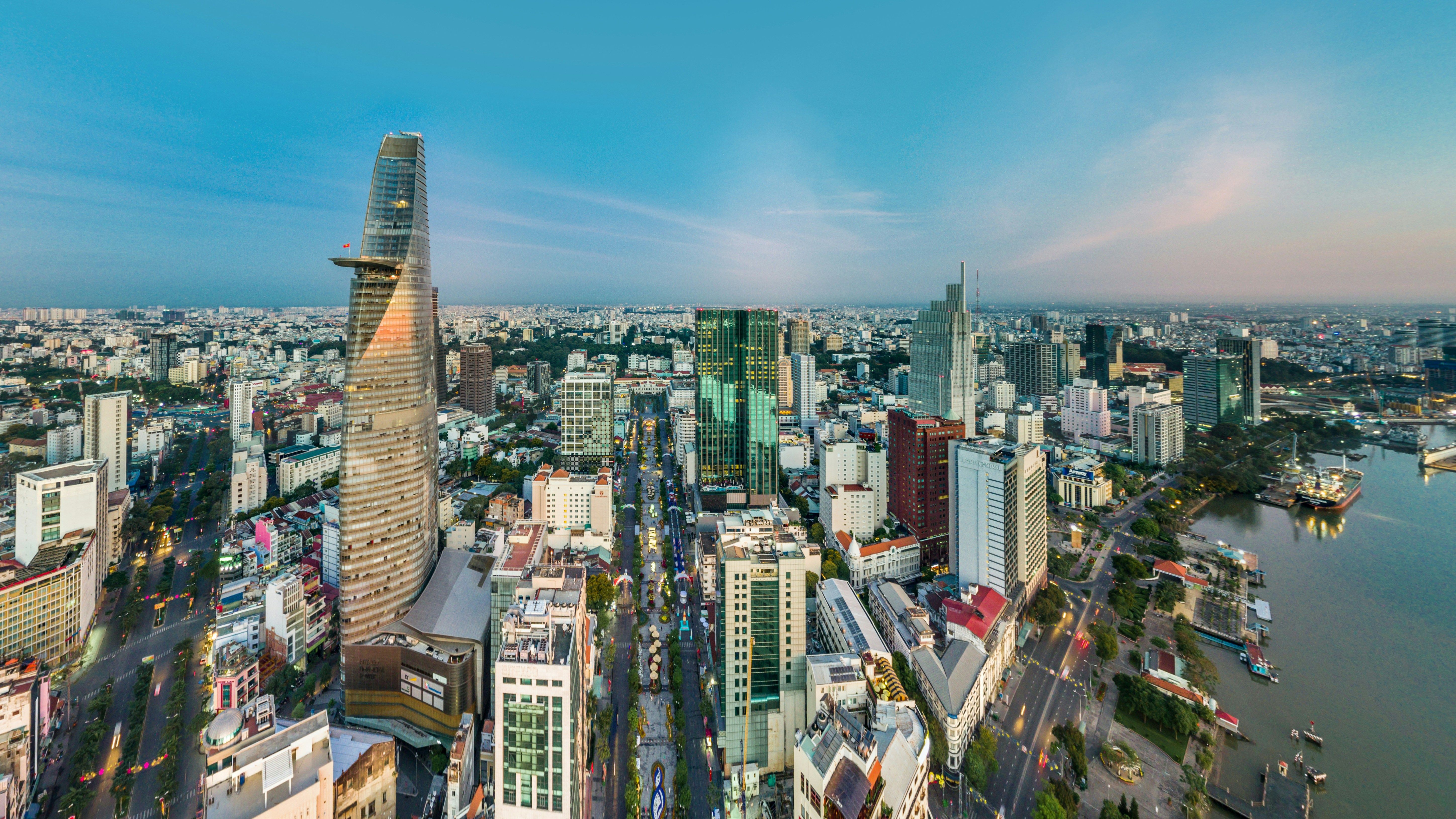
Why Ho Chi Minh City Should Be Your Next Expansion Market?
In 2025, Ho Chi Minh City attracted $8.37 billion in Foreign Direct Investment. Behind that number is a city that has spent the last decade building the infrastructure, talent base, and regulatory frameworks that large-scale capital requires — and that founders expanding into Southeast Asia increasingly depend on.
A Market With Real Depth
Ho Chi Minh City is home to more than 14 million people and sits at the economic center of Vietnam, one of Southeast Asia’s most consistent growth stories. It generates 60% of all startup investment deals nationally and concentrates 44% of Vietnam’s total startup capital. These numbers reflect decades of accumulated private sector depth and infrastructure investment, not a moment of temporary momentum. For a startup evaluating market entry, what matters is not only current size but also its momentum. HCMC’s ecosystem score stands 46% higher than second-place Hanoi. The gap is widening, and the fundamentals driving it are structural.
Talent That Scales With You
One of the most cited constraints for scaling startups in emerging markets is talent availability. In Ho Chi Minh City, this concern is materially reduced. Nearly 100 universities and research institutions produce a continuous pipeline of software engineers, AI researchers, and Web3 developers. The skill level is high. The cost, relative to Singapore, Seoul, or any Western market, remains a genuine competitive advantage. Vietnam’s developer community has also built a strong international reputation, particularly in software engineering, and increasingly in artificial intelligence and blockchain. For startups that need technical teams capable of executing quickly and growing without immediately compressing margins, HCMC offers a realistic, proven answer.
Regulation Built for Innovators
Bureaucracy has historically been cited as a friction point for foreign founders entering Vietnam. That friction has not disappeared entirely, but Ho Chi Minh City has put specific mechanisms in place to reduce it in the areas that matter most.
Under Decree 11/2024, qualifying innovative startups receive a five-year Corporate Income Tax exemption. Companies operating in high-tech sectors, including AI, software, semiconductors, and R&D, are eligible for a preferential 10% corporate tax rate for up to 15 years, compared to the standard 20%. Investors also benefit from personal and corporate tax exemptions on capital transfers under Resolution 98/2023. For international founders specifically, 100% foreign ownership is permitted with no local partner requirement. Non-dilutive grants ranging from VND 40 million to VND 400 million are available through SIHUB, the city’s flagship innovation hub.
On the regulatory navigation side, SIHUB’s legal and intellectual property advisory is specifically designed to help foreign founders move through the compliance process without it becoming a full-time job. National sandbox programs in fintech, healthtech, and digital products allow companies to test in a live market with reduced compliance burden.
Infrastructure That Supports Scale
SIHUB’s 17,000 square metre flagship facility, inaugurated in 2025, is the most visible piece of a broader support architecture. Beyond the physical space, SIHUB provides active assistance across legal affairs, fundraising, technology development, and international market access, as well as dedicated soft-landing pathways for founders arriving from outside Vietnam.
The Ho Chi Minh City Hi-Tech Park (SHTP) adds another layer for companies in hardware, electronics, biotech, and precision engineering, offering preferential tax rates, customs exemptions, and streamlined administrative processes within a designated innovation zone.
Capital Is Moving Here
Access to capital is a prerequisite for scaling, and HCMC’s investor landscape has matured considerably. Over 290 VC firms have deployed capital in the city. Active funds including Do Ventures, Mekong Capital, CyberAgent Capital, Touchstone Partners, and 500 Global maintain consistent presence. Cross-border capital flows in regularly from Singapore, South Korea, and Japan.
In 2026, the HCMC City Venture Capital Fund launched with VND 500 billion, approximately USD 19.7 million, in charter capital, with founding shareholders including Vingroup, VinaCapital, VNG Corporation, FPT, and Lotte Ventures Vietnam. This is a city-backed vehicle designed specifically to deepen early and growth-stage funding availability.
Proof of Concept Already Exists
Perhaps the most grounded argument for HCMC is the one already written. MoMo and Sky Mavis, both headquartered here, achieved unicorn status in 2021 and have since raised significant capital from top-tier global investors.
More recently, the ecosystem has continued to surface strong performers. Logistics platform Loship and edtech company Educa have drawn regional investor interest, signalling that the momentum generated by the first wave of breakout companies has not stalled. The pipeline is active.
In StartupBlink’s Global Startup Ecosystem Index 2025, HCMC holds the 22nd position globally in blockchain ecosystems and ranks second in Southeast Asia in the sector, a domain where early positioning tends to generate durable competitive advantages.
These are not isolated stories. They are early indicators of what a market with the right combination of talent, capital, and regulatory support can produce at scale.
A City With a Clear Destination
Ho Chi Minh City has set a public target: reach the top 100 most dynamic startup ecosystems globally by 2030. The policy roadmap to get there is focused on three areas, regulation, infrastructure, and human capital, and the legislative and institutional moves of the past two years reflect a city executing on that plan rather than simply announcing it.
Nearly 60,000 new businesses were established in HCMC in the past year alone. The city is building momentum at the base of the pyramid while developing the infrastructure to support what those companies become.
For founders and investors who want to be in a market while it is still ascending, rather than after the opportunity has been priced in, that timeline matters. The window to establish an early position in HCMC’s ecosystem, with the policy support, capital access, and talent infrastructure now in place, is open. It will not stay that way indefinitely.
Want to Get in Touch?
Have something to share or explore within the ecosystem? Let us know how we can help — from adding events and opportunities to discussing partnerships or ideas.
This portal and contact form are fully operated by StartupBlink, the global platform supporting ecosystem growth worldwide.